

Propylene Glycol Market Size to Surpass USD 6.63 Billion by 2032: Silent Infrastructure Chemical Reshaping 5 Industries
Propylene Glycol Market
From food-safe humectants to aircraft de-icing fluids, PG’s low-toxicity profile and bio-circular evolution are redefining chemical specification standards.
“Propylene glycol is no longer just a chemical, it is load-bearing infrastructure for industries that cannot afford toxicity risk,” says Maximize Market Research.”
ROCKVILLE , MD, UNITED STATES, April 7, 2026 /EINPresswire.com/ -- Global Propylene Glycol Market Size, Share & Industry Analysis: USD 4.91 Bn in 2025, Racing to USD 6.63 Bn by 2032— Maximize Market Research
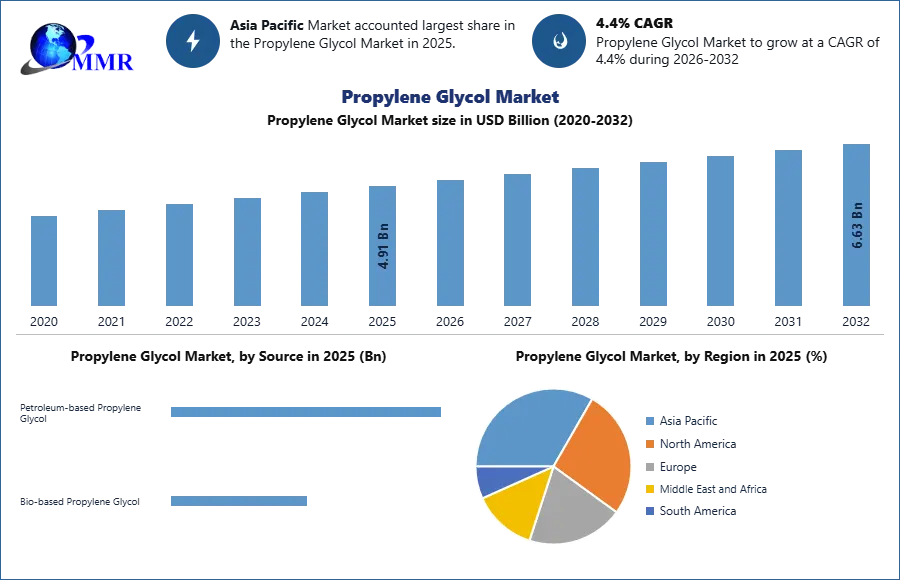
The Global Propylene Glycol Market was valued at USD 4.91 Billion in 2025 and is projected to reach USD 6.63 Billion by 2032, expanding at a 4.4% CAGR. This growth highlights a structural pivot from petroleum-dependence to sustainable, bio-based propylene glycol solutions. Driven by unsaturated polyester resins (UPR) demand and the rise of pharmaceutical-grade (USP) propylene glycol, the market is evolving into a high-performance utility. As the automotive industry integrates low-toxicity antifreeze and coolants, brands are leveraging clean-label ingredients to navigate FDA-driven reforms and secure a dominant market share 2026 across global supply chains.
Get Full PDF Sample Copy of Report: (Including Full TOC, List of Tables & Figures, Chart) @ https://www.maximizemarketresearch.com/request-sample/33146/
What Is Pulling USD 6.63 Billion Worth of Demand?
Three specification-driven verticals are structurally anchoring the Propylene Glycol Market Forecast 2032 trajectory. Unsaturated polyester resins (UPR) growing at a 3.7% CAGR, represent the single largest demand engine, driven by construction and composites expansion across Asia-Pacific. Simultaneously, food-safe humectant and FDA-approved stabilizer applications are scaling as processed food manufacturers embed USP-grade PG as a clean-label ingredient standard. The transportation sector, expanding at a 5.6% CAGR, is locking in non-toxic de-icing fluid procurement, a captive, specification-locked vertical insulated from commodity pricing pressure and immune to demand elasticity through 2032.
Why Feedstock-Linked Pricing Models Remain the Market’s Sharpest Double-Edged Sword
Reliance on petroleum-based feedstocks exposes manufacturers to crude-linked raw material price volatility. This compresses margins, especially for mid-tier players. Furthermore, the high capital intensity and R&D required for bio-based propylene glycol infrastructure create significant entry barriers for smaller firms, despite the long-term regulatory advantages of transitioning to renewable, glycerin-based feedstocks.
Bio-Circular Technology and the Clean-Label Ingredient Revolution: Where Is the Real Upside?
USP-grade PG demand is surging due to clean-label mandates in EU and North American personal care. Simultaneously, bio-circular propylene glycol from glycerin is unlocking premium pricing and decarbonizing supply chains. Furthermore, Type I aircraft de-icing fluids provide a high-margin, non-discretionary vertical, insulating the market from price sensitivity through strict safety specifications.
Propylene Glycol Market Segmentation: Which Source, Application, and Vertical Commands the Highest Strategic Value?
The Global Propylene Glycol Market is segmented by source, application, and end-user. Petroleum-based sources dominate with over 70% share, while bio-based propylene glycol is the fastest-growing segment due to decarbonization trends. By application, Unsaturated Polyester Resins (UPR) lead, expanding at a 3.7% CAGR. The transportation sector commands over 35% of the market, growing at 5.6% CAGR as demand rises for non-toxic de-icing fluids, coolants, and brake fluids. High-velocity growth in Asia-Pacific further cements the region as the primary volume engine through 2032.
By Source
Petroleum-based Propylene Glycol
Bio-based Propylene Glycol
By Application
Unsaturated Polyester Resin
Food, Pharmaceuticals & Cosmetics
Antifreeze & Functional Fluid
Liquid Detergents
Plasticizers
Others
By End-User Industry
Transportation
Building & Construction
Pharmaceuticals & Cosmetics
Food & Beverage
Others
Get Full PDF Sample Copy of Report: (Including Full TOC, List of Tables & Figures, Chart) @ https://www.maximizemarketresearch.com/request-sample/33146/
Asia-Pacific Commands and North America Premiumizes : A Two-Speed Growth Map
Asia-Pacific - Dominant Market Leader
Asia-Pacific led the market with a 34% share in 2025, anchored by industrial booms in India and China. Rapid urbanization is driving demand for PG-based coolants and USP-grade additives in food and pharma. As the global volume engine, the region’s expanding infrastructure and middle-class consumption make it the highest-priority growth corridor through 2032.
North America - Premiumization and Specification-Driven Growth
North America is the global benchmark for specification-driven propylene glycol adoption. Stringent EPA and FDA frameworks are accelerating the shift from ethylene glycol to USP-grade PG in de-icing, pharmaceuticals, and food-grade stabilizers. Brands are increasingly leveraging bio-based propylene glycol to meet clean-label demand, positioning the region as a high-margin, compliance-led template.
Key Market Trends Reshaping the Global Propylene Glycol Industry
Ethylene-to-Propylene Glycol Substitution Wave The shift from ethylene to propylene glycol is now a procurement-level mandate. Driven by PG’s non-toxic, low-toxicity antifreeze status, this substitution is structurally expanding volume across food processing and automotive sectors, prioritizing safety over environmental preference.
Bio-Based PG: Specification-Grade Infrastructure Industry leaders are scaling bio-circular platforms using glycerin feedstocks. EU REACH and FDA clean-label frameworks have elevated bio-based PG from a sustainability signal to a mandatory, regulatory-compliant requirement for global food, pharma, and personal care formulations.
Non-Toxic De-Icing Fluids: A Captive Vertical Expanding airport infrastructure is fueling demand for non-toxic de-icing fluids. PG-based Type I formulations now dominate runway contracts, creating a high-volume, specification-locked revenue corridor in North America and Asia-Pacific that is insulated from typical commodity pricing pressures.
Raw Material Volatility: Structural Risk Premium Raw material price volatility is reshaping procurement. To counter margin compression from crude-linked propylene oxide fluctuations, leading producers are vertically integrating or securing long-term feedstock contracts to protect downstream pricing and supply chain stability through 2032.
Competitive Landscape: Who Controls the Propylene Glycol Market’s Critical Supply Nodes?
Global Propylene Glycol Industry Analysis reveals a competitive arena defined by vertical integration and bio-transition. Dow and LyondellBasell command the petroleum-based segment through scale, while ADM and DuPont Tate & Lyle lead in bio-based propylene glycol by leveraging agricultural infrastructure. BASF and Huntsman compete via specialized pharmaceutical and construction formulations. The Propylene Glycol Market Share 2026 bifurcation between petroleum-scale producers and bio-circular specialists is accelerating strategic investments in bio-circular technology and Asia-Pacific manufacturing remain the decisive levers for capturing Propylene Glycol Market Forecast 2032 leadership.
Propylene Glycol Market Key Players
The Dow Chemical Company
LyondellBasell Industries N.V.
BASF SE
Archer Daniels Midland Company (ADM)
Global Bio-Chem Technology Group Co., Ltd.
Huntsman Corporation
SKC Co., Ltd.
Royal Dutch Shell PLC
Ineos Oxide
DuPont Tate & Lyle Bio Products Company, LLC
Asahi Glass Co., Ltd. (AGC Inc.)
Adeka Corporation
Manali Petrochemicals Limited
Temix International S.R.L.
Haike Chemical Group
Helm AG
Oleon NV
Arrow Chemical Group Corp.
Get access to the full description of the report @ https://www.maximizemarketresearch.com/market-report/global-propylene-glycol-market/33146/
Recent Developments in the Global Propylene Glycol Market
2025 - DuPont Tate & Lyle Bio Products expanded bio-based propylene glycol production capacity, directly responding to rising clean-label ingredient mandates in food and personal care formulations across North America and Europe.
2025 - LyondellBasell advanced its propylene oxide integration strategy, locking in feedstock supply at scale to mitigate the effect of raw material price volatility on glycol manufacturing margins.
2024 - BASF SE strengthened its pharmaceutical-grade PG portfolio, targeting the expanding USP Grade vs. Industrial Grade PG bifurcation driven by healthcare and personal care application growth.
2024 - Manali Petrochemicals Limited scaled its India manufacturing footprint, capitalizing on Asia-Pacific’s dominant position and the surge in domestic automotive and construction downstream application demand.
FAQs: Global Propylene Glycol Market
Q1. What is the impact of raw material price volatility on glycol manufacturing?
Ans. Feedstock-linked pricing tied to propylene oxide creates margin compression risks. Leading producers are mitigating this through vertical integration and long-term contracts to stabilize downstream application pricing and protect global supply chain commitments through the 2032 forecast period.
Q2.How is the ethylene-to-propylene glycol substitution wave reshaping the market?
Ans. Driven by non-toxic, low-toxicity antifreeze requirements, industries are pivoting from ethylene to propylene glycol. This procurement mandate is structurally expanding market volume across food processing, pharmaceutical solvents, and automotive coolants, prioritizing safety and regulatory compliance over traditional preferences.
Q3. Why is USP-grade PG gaining traction in the personal care sector?
Ans. Global clean-label mandates and FDA/EU REACH frameworks are driving demand for high-purity, USP-grade formulations. The rise of bio-circular PG, derived from renewable glycerin, allows brands to decarbonize value chains while accessing premium pricing corridors in high-end cosmetics and skincare.
Analyst Perspective
The Global Propylene Glycol Market is a resilient, specification-driven sector expanding at a 4.4% CAGR through 2032. Analysts cite non-discretionary demand for Type I de-icing fluids and USP-grade food stabilizers as core drivers. Leading vendors bridging petroleum-scale with bio-based transitions will dominate as demand shifts toward sustainable, regulatory-compliant procurement.
Related Reports
Ethylene Glycol Market: https://www.maximizemarketresearch.com/market-report/global-ethylene-glycol-market/2137/
Ethylene Glycol Market by Application (Antifreeze, Polyester Fiber, PET Resin), Source (Petroleum-based, Bio-based), and Region - Global Forecast to 2032
Polyurethane Market: https://www.maximizemarketresearch.com/market-report/global-polyurethane-market/4009/
Polyurethane Market by Product Type (Rigid Foam, Flexible Foam, Coatings), Application (Construction, Automotive, Furniture), and Region - Global Forecast to 2032
Unsaturated Polyester Resin Market: https://www.maximizemarketresearch.com/market-report/global-unsaturated-polyester-resin-market/6929/
Unsaturated Polyester Resin Market by Type, Application (Marine, Construction, Pipes & Tanks), and Region - Global Forecast to 2032
Antifreeze Coolant Market: https://www.maximizemarketresearch.com/market-report/global-antifreeze-coolant-market/42291/
Antifreeze Coolant Market by Product (Ethylene Glycol, Propylene Glycol), Application (Automotive, HVAC, Industrial), and Region - Global Forecast to 2032
Bio-based Chemicals Market: https://www.maximizemarketresearch.com/market-report/global-bio-based-chemicals-market/72978/
Bio-based Chemicals Market by Product (Bio-alcohols, Bio-acids, Bio-glycols), Application (Packaging, Textile, Automotive), and Region - Global Forecast to 2032
Top Reports:
Crude Sulfate Turpentine Market
Global Polypropylene Catalyst Market
About Maximize Market Research Pvt. Ltd.
Maximize Market Research is a premier global consulting firm headquartered in Pune, India. Serving 45+ countries, MMR delivers high-granularity intelligence across Chemical & Material, Pharmaceuticals, and Automotive sectors empowering enterprises to make strategic decisions with confidence.
Domain Focus
This report falls under Maximize Market Research’s Chemical & Material domain, spanning specialty glycols, bio-based chemical platforms, polymer resins, and industrial fluid formulations across 45+ countries delivering the intelligence procurement leaders and investors need to navigate specification-driven markets with confidence through 2032.
Lumawant Godage
MAXIMIZE MARKET RESEARCH PVT. LTD.
+91 96073 65656
akash.r@maximizemarketresearch.com
Visit us on social media:
LinkedIn
Instagram
Facebook
X
Legal Disclaimer:
EIN Presswire provides this news content "as is" without warranty of any kind. We do not accept any responsibility or liability for the accuracy, content, images, videos, licenses, completeness, legality, or reliability of the information contained in this article. If you have any complaints or copyright issues related to this article, kindly contact the author above.
