
Maternal obesity linked to 64% increase in childhood obesity risk
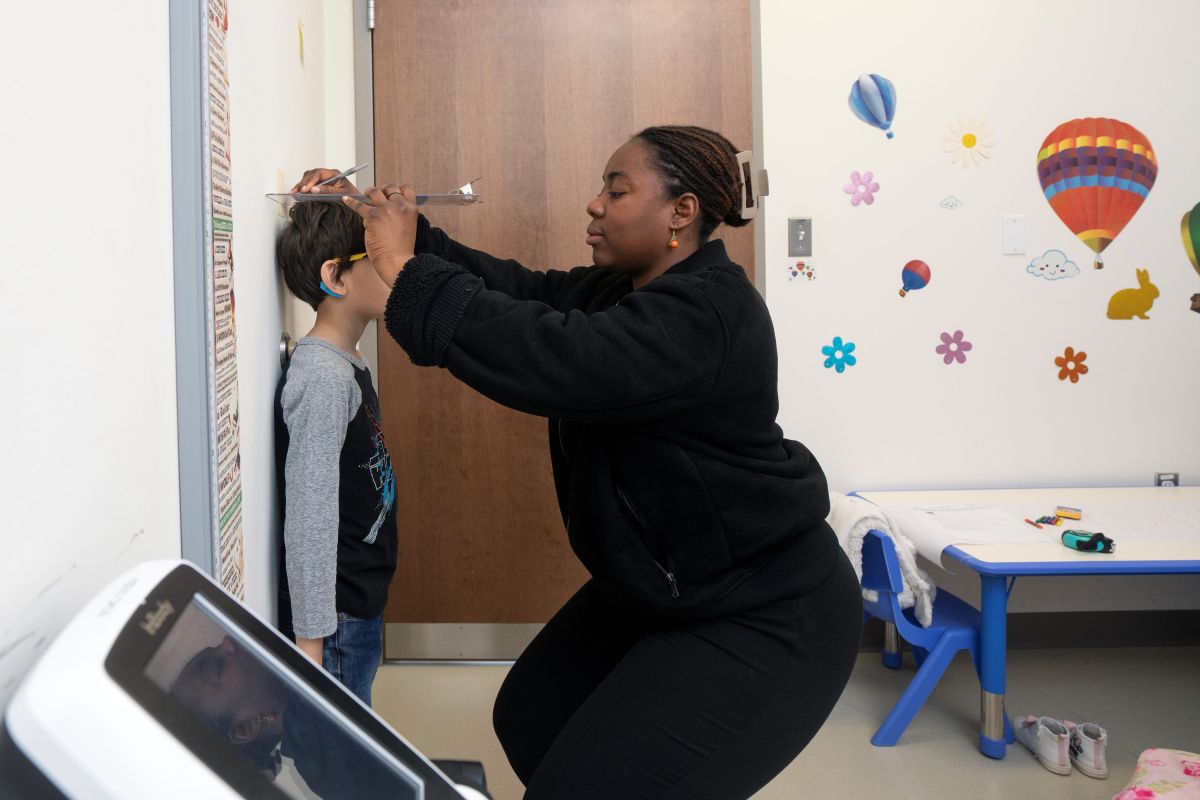
Photo by Evan Cantwell/George Mason University. A researcher at George Mason University's College of Public Health takes measurements and vitals from a child in the National Institutes of Health’s Environmental influences on Child Health Outcomes (ECHO) P
NIH-funded George Mason study found that maternal obesity and excessive pregnancy weight gain were linked to higher obesity risk by age 3.
FAIRFAX, VA, UNITED STATES, June 23, 2026 /EINPresswire.com/ -- The roots of childhood obesity may begin in the womb.
New research led by the George Mason University College of Public Health found that children whose mothers entered pregnancy with obesity were 64% more likely to become overweight or obese by age 3. Excessive weight gain during pregnancy was associated with a 39% increase in that risk.
“Our findings suggest that childhood obesity risk may not develop in a single, uniform way, but maternal health before and during pregnancy may play a larger role than many people realize,” said study lead author Hua Min, associate professor in the Department of Health Administration and Policy.
Different pregnancy-related weight factors appeared to matter at different stages, with excess pregnancy weight gain more closely linked to infant weight and maternal obesity more strongly associated with weight later in toddlerhood.
Researchers also found that excess pregnancy weight gain was common, affecting about four in 10 mothers in the study.
Published in the International Journal of Obesity, the research is among the largest and most ethnically diverse U.S. longitudinal studies to examine how maternal weight may influence obesity risk in early childhood. Researchers tracked nearly 3,000 mother-child pairs, using data from a Northern Virginia birth cohort participating in the National Institutes of Health’s Environmental influences on Child Health Outcomes (ECHO) Program.
The George Mason research team included Michael S. Bloom of the Department of Global and Community Health, and Grace Lawrence, Alma Fuller and Kathi C. Huddleston of the School of Nursing.
Why this matters
Childhood obesity remains one of the most pressing health challenges in the United States. The study notes that nearly 90% of children with obesity at age 3 will continue to be overweight or obese into early adulthood. Those early patterns can carry long-term consequences, increasing risks for diabetes, cardiovascular disease, and other chronic health problems.
Researchers say the findings reinforce the importance of maternal health before and during pregnancy—not just for pregnancy outcomes, but also for a child’s long-term health trajectory. The findings also suggest that obesity risk may develop differently across populations, with patterns varying among demographic groups.
Study details
Findings were based on the First Thousand Days of Life Study, a Northern Virginia birth cohort participating in the ECHO Program, which examines how early-life experiences affect child health. George Mason was selected as an ECHO research site in 2019.
Researchers enrolled 2,899 mother-child pairs in Northern Virginia between 2012 and 2019, following families from pregnancy through age 3.
Key findings include:
— Children whose mothers were obese before pregnancy were 64% more likely to be overweight or obese by age 3.
— For every one-point increase in maternal pre-pregnancy body mass index (BMI), childhood overweight/obesity risk increased by about 4%.
— Children whose mothers gained excessive weight during pregnancy were about 39% more likely to be overweight or obese by age 3.
— About 41% of mothers in the study gained more weight during pregnancy than recommended by national guidelines.
— Excess weight gain during pregnancy showed stronger links to higher weight earlier in infancy, while maternal weight before pregnancy became more strongly associated with higher child weight later in early childhood.
— The associations between maternal weight factors and childhood obesity differed between Hispanic and non-Hispanic families, suggesting that obesity risk may develop differently across populations.
##
MEDIA INQUIRIES: For reporters who wish to speak to Dr. Min about this research, please email media contact Mary Cunningham at mcunni7@gmu.edu.
About George Mason University
George Mason University is Virginia’s largest public research university. Located near Washington, D.C., Mason enrolls more than 40,000 students from 130 countries and all 50 states. Mason has grown rapidly over the past half-century and is recognized for its innovation and entrepreneurship, remarkable diversity, and commitment to accessibility. In 2023, the university launched Mason Now: Power the Possible, a one-billion-dollar comprehensive campaign to support student success, research, innovation, community, and stewardship. Learn more at gmu.edu.
About College of Public Health at George Mason University
The College of Public Health at George Mason University is the first College of Public Health in Virginia and a national leader in inclusive, interprofessional, public health research, education, and practice. The college comprises public health disciplines, health administration and policy, informatics, nursing, nutrition, and social work. The college offers a distinct array of degrees to support research and training of professionals dedicated to ensuring health and well-being for all. The college’s transdisciplinary research seeks to understand the many factors that influence the public’s health and well-being throughout the lifespan.
Mary Cunningham
George Mason University College of Public Health
+1 703-993-1931
mcunni7@gmu.edu
Visit us on social media:
LinkedIn
Instagram
Facebook
YouTube
Legal Disclaimer:
EIN Presswire provides this news content "as is" without warranty of any kind. We do not accept any responsibility or liability for the accuracy, content, images, videos, licenses, completeness, legality, or reliability of the information contained in this article. If you have any complaints or copyright issues related to this article, kindly contact the author above.
