

Antibacterial Drugs Market to Reach US$76.5 Billion by 2033 at 4.8% CAGR | Persistence Market Research
Antibacterial Drugs Market
BRENFORD, LONDON, UNITED KINGDOM, August 10, 2026 /EINPresswire.com/ -- The global Antibacterial Drugs Market continues to play an essential role in healthcare as bacterial infections remain a major clinical challenge. Antibacterial medicines are widely used for treating respiratory infections, urinary tract infections, skin infections, gastrointestinal conditions, and other bacterial diseases. Rising infection incidence, expanding healthcare access, improved diagnostics, and continued pharmaceutical research are supporting demand. Hospitals remain important end users because of the need to manage serious and complicated infections. Among drug categories, established broad-spectrum antibiotics continue to represent an important segment due to their extensive clinical applications.
Want Market Insights? Get Your Free Report Sample : https://www.persistencemarketresearch.com/samples/2987
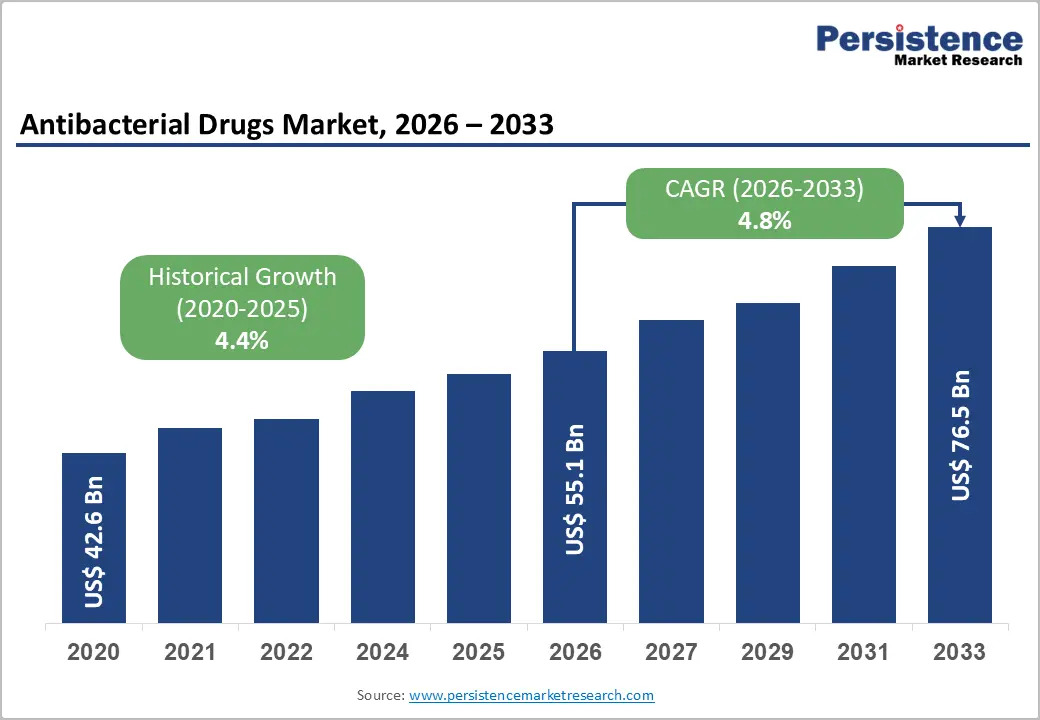
According to Persistence Market Research, the global antibacterial drugs market is likely to be valued at US$55.1 billion in 2026 and is projected to reach US$76.5 billion by 2033, expanding at a CAGR of 4.8% during 2026–2033. Growth is supported by rising bacterial disease burden, increasing healthcare expenditure, antibiotic innovation, and demand for effective treatments against resistant pathogens. North America remains a leading geographical market, supported by established healthcare infrastructure, strong pharmaceutical research capabilities, advanced diagnostic facilities, and significant access to antibacterial therapies.
Key Highlights from the Report
➤ Growing antimicrobial resistance is strengthening the need for innovative antibacterial therapies with improved effectiveness.
➤ Hospitals remain a major demand center due to treatment requirements for severe and healthcare-associated bacterial infections.
➤ Pharmaceutical companies are emphasizing research into novel mechanisms of action and improved antibiotic formulations.
➤ Advanced diagnostic technologies are supporting more targeted antibacterial drug selection and responsible antibiotic use.
➤ Emerging healthcare systems provide long-term opportunities through expanding treatment access and improving infectious disease management.
Market Segmentation
The antibacterial drugs market can be segmented by drug class, route of administration, indication, and distribution channel. Major drug categories include penicillins, cephalosporins, macrolides, fluoroquinolones, tetracyclines, and other antibacterial classes. Selection depends on infection type, bacterial susceptibility, patient condition, treatment setting, and resistance patterns. Oral antibacterial drugs remain important for outpatient treatment, while injectable therapies are commonly required for severe infections requiring hospital care.
By application, antibacterial drugs address respiratory, urinary tract, skin and soft tissue, gastrointestinal, and other bacterial infections. Distribution occurs through hospital pharmacies, retail pharmacies, and other healthcare channels. Hospitals represent an important end-user environment due to complicated infections and intensive treatment requirements. Increasing diagnostic precision is also encouraging physicians to select therapies based on pathogen identification and susceptibility patterns.
Regional Insights
North America maintains a prominent position in the Antibacterial Drugs Market because of advanced healthcare infrastructure, pharmaceutical innovation, established hospital networks, and strong awareness of infectious disease management. Continued research into antimicrobial resistance and newer treatment approaches supports regional market development.
Europe also represents an established market supported by organized healthcare systems and antibiotic stewardship initiatives. Asia Pacific presents expanding opportunities as healthcare access improves, patient populations grow, and infectious disease management receives greater attention. Improving diagnostic infrastructure and pharmaceutical manufacturing capabilities further support regional development.
Customize This Report for Your Exact Requirements : https://www.persistencemarketresearch.com/request-customization/2987
Market Drivers
Increasing incidence of bacterial infections remains a fundamental market driver. Population growth, greater healthcare utilization, hospital-associated infections, and vulnerable patient populations sustain the need for effective antibacterial treatments. Growing awareness regarding early diagnosis is also encouraging timely treatment and supporting demand across healthcare settings.
Antimicrobial resistance is simultaneously reshaping pharmaceutical research priorities. Resistance to existing therapies creates demand for antibiotics with differentiated mechanisms and improved clinical effectiveness. Pharmaceutical developers are consequently exploring new compounds, combination therapies, optimized formulations, and targeted treatment strategies.
Market Restraints
Antimicrobial resistance remains one of the industry's most significant challenges because inappropriate or excessive antibiotic use can reduce treatment effectiveness. Healthcare authorities are increasingly promoting antibiotic stewardship, which can restrict unnecessary prescribing and encourage more selective use of antibacterial medicines.
Drug development also presents scientific and commercial challenges. Discovering antibacterial compounds capable of addressing resistant organisms requires extensive research, clinical evaluation, and regulatory assessment. Treatment failures and changing resistance patterns can further complicate clinical decision-making.
Unlock Complete Insights – Buy the Full Report : https://www.persistencemarketresearch.com/checkout/2987
Market Opportunities
Innovation targeting resistant bacterial pathogens creates substantial opportunities for pharmaceutical developers. Novel drug classes, combination therapies, precision diagnostics, and pathogen-specific treatment approaches can help improve clinical outcomes while supporting more responsible antibiotic utilization.
Emerging healthcare markets offer another avenue for expansion. Improving hospital infrastructure, broader diagnostic access, healthcare investment, and growing awareness of infectious diseases can strengthen antibacterial treatment availability. Partnerships between pharmaceutical developers and healthcare organizations can further improve access and innovation.
Company Insights
Key players operating in the antibacterial drugs industry include Pfizer Inc., GSK plc, Merck & Co., Inc., Johnson & Johnson, Bayer AG, Novartis AG, Sanofi, AbbVie Inc., AstraZeneca, and Roche.
Explore the Latest Trending Research Reports:
CAR T-Cell Therapy Market
Elbow Splints Market
Persistence Market Research
Persistence Market Research Pvt Ltd
+1 646-878-6329
email us here
Visit us on social media:
LinkedIn
Instagram
Facebook
YouTube
X
Legal Disclaimer:
EIN Presswire provides this news content "as is" without warranty of any kind. We do not accept any responsibility or liability for the accuracy, content, images, videos, licenses, completeness, legality, or reliability of the information contained in this article. If you have any complaints or copyright issues related to this article, kindly contact the author above.
