
Nita Mukesh Ambani Cultural Centre Presents Second Nature, with Immersive Installations by Leading International Artists
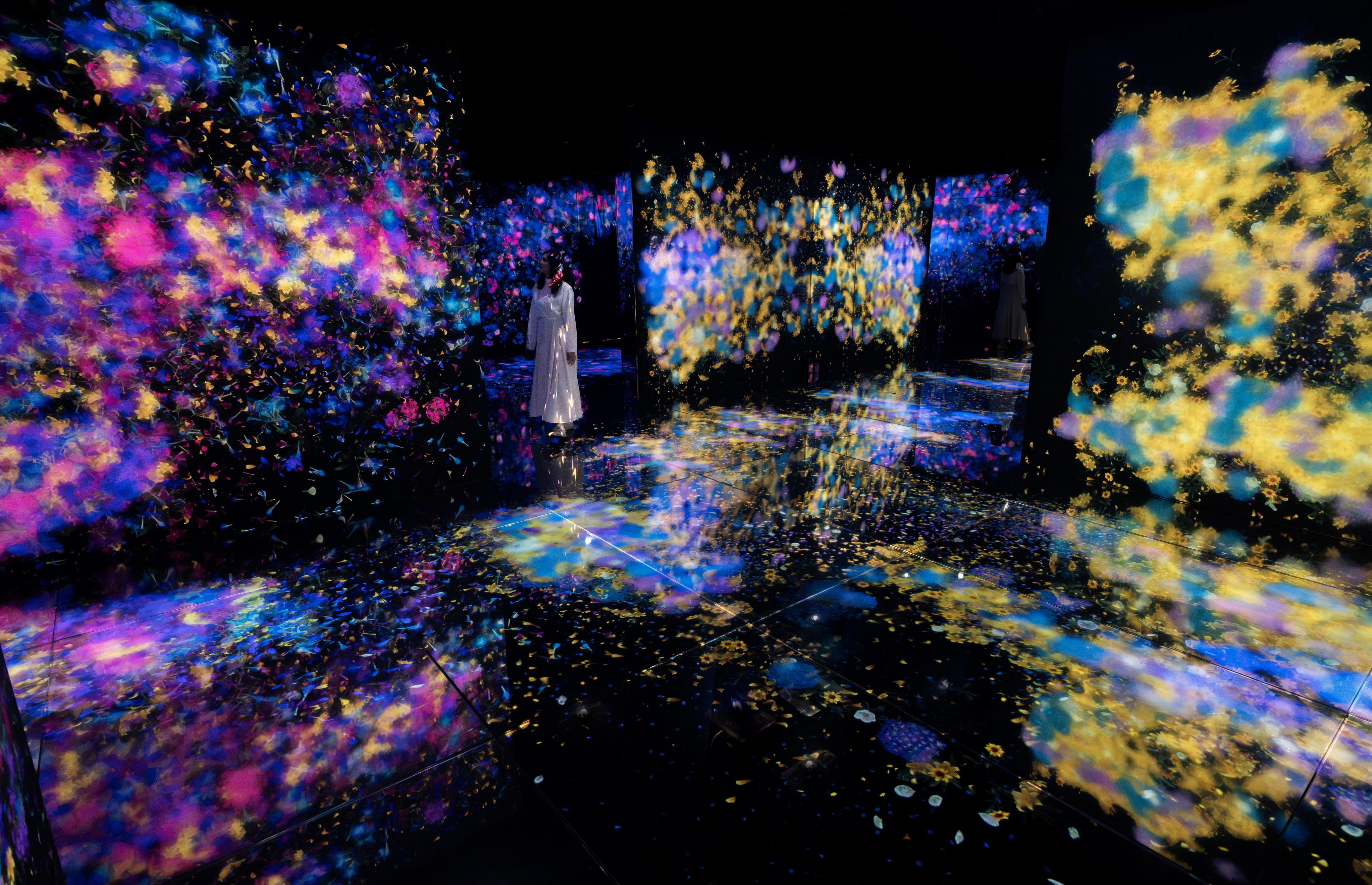
teamLab, Flowers and People, Cannot be Controlled but Live Together. Image courtesy NMACC.
Groundbreaking installations by Random International, teamLab, A.A.Murakami, Simon Heijdens and Es Devlin explore the convergence of art, technology, and nature
MUMBAI, INDIA, September 16, 2026 /EINPresswire.com/ -- The Nita Mukesh Ambani Cultural Centre (NMACC) presents Second Nature, a groundbreaking immersive art exhibition that illuminates the evolving, interdependent relationship between humans, technology, and the natural world. Second Nature is a global collaboration that brings together an international group of artists working at the forefront of art and technology and is organised by the co-founder and the curator of trailblazing experiential art venture Superblue. Spanning all four floors of the Art House, the exhibition includes large-scale installations by Random International, teamLab, A.A.Murakami, Simon Heijdens and Es Devlin, that dynamically respond to the site and visitor interaction, presented in India for the first time. Now open, the exhibition will remain on view through January 10, 2027.“Today, art is evolving beyond traditional forms, shaped not only by human imagination but also by intelligent systems learning to interpret the world around us. With Second Nature, we wanted to bring an experience for the country that sparks curiosity, emotion, and reflection, an exploration of how technology, nature, and human creativity are becoming increasingly intertwined”, shares Ms. Isha Ambani. “This exhibition invites audiences into a dialogue with the future, one that already feels strikingly real”.
Curated by Superblue co-founder Mollie Dent-Brocklehurst and head of curatorial Margot Mottaz, Second Nature transforms digital systems into interactive environments that inspire physical participation over passive observation. In the artists’ subversive hands, familiar and occasionally troubling technologies that increasingly permeate and mediate our lives are rendered sensorial, evocative and poetic—capturing the tension between agency and surrender, whether to algorithms or natural cycles of decay and rebirth. Replacing a flattened screen or canvas, these experiential works inspire visitors to move, respond, touch, and become part of the art itself. Second Nature considers possibilities of boundaries between human, nature, and technology – as they begin to dissolve - inviting visitors into the dynamic ecosystems that shape our collective future.
The exhibition underscores NMACC’s vision—bringing the best of India to the world and the best of the world to India. Past exhibitions at the Art House include presentations by acclaimed artists such as Doug Aitken, Maurizio Cattelan and Pierpaolo Ferrari, and the Dia Art Foundation. The National Pavilion of India at the 61st International Art Exhibition—La Biennale di Venezia, presented by the Ministry of Culture, Government of India, in partnership with NMACC and Serendipity Arts, further reinforces the Centre’s vision to showcase India’s artistic and cultural heritage internationally.
“We are excited to bring some of the most compelling artists in the field of experiential art to India for the first time with the Nita Mukesh Ambani Cultural Centre, introducing their multifaceted, interactive installations to new audiences. The works in Second Nature show us ways in which technologies can surprise, delight and inspire us, while encouraging us to probe their profound implications on our day-to-day life,” add Dent-Brocklehurst and Mottaz.
ABOUT THE INSTALLATIONS
Floor One: Random International
The three works by London-based art group Random International explore the psychological complexities of the digital gaze, exploring themes of identity, memory, and how we instinctively and emotionally relate to our own image. By turning automated technologies into responsive mirrors, the works blur the boundaries between human and machine, audience and artwork, transforming the viewer into the primary subject. At the centre is Presence and Erasure (2019), a “portrait machine” that scans and temporarily prints large-scale photographs of visitors, only for the images to dissolve into blankness in little more than a minute: a transient, non-repeatable experience that serves as a statement on the fleeting nature of our presence.
This is joined by Our Future Selves (2019), where viewers meet their own three-dimensional reflections reduced to points of light. The encounter feels familiar yet ethereal, existing in an uncertain psychological space between a live reflection and a frozen photograph. Finally, Audience (2008) features a horde of anthropomorphic, mechanical mirrors. As the visitor approaches, the mirrors suddenly abandon their individual movements to track the visitor in a synchronised, inquisitive gesture. Confronted by their own image from every angle, the visitor experiences an uncanny, heightened state of self-awareness, shifting from a passive observer to an active participant in a shared, moving ecosystem.
Floor Two: teamLab
The three installations by Tokyo-based international art collective teamLab explore coexistence between humans and their environment through living, non-repeatable digital environments transformed by human presence. Rather than framing humanity and nature as conflicting forces, these experiential works explore a healthy ecosystem that includes people, inviting visitors to step out of their roles as passive viewers and become active participants in a shared, living environment. One of teamLab’s distinctive interactive spaces, Flowers and People, Cannot be Controlled but Live Together (2014—ongoing) renders a real-time floral ecosystem that blossoms and withers in real-time response to human presence. Because previous visual states can never be replicated, the picture at any given moment is transient, meditating on a relationship with nature that is never the same twice.
Resonating Microcosms — Solidified Light (2022—ongoing) anchors teamLab’s experimentation with interactive light in the tactile world, featuring an enchanting array of glowing, multicolour ovoid sculptures that brighten and emit sound when touched, forming an abstracted environment in which the visitor becomes an integral part. The work’s NMACC presentation includes new hanging light elements that expand the dazzling colour variety, subjectivity, and visual complexity of the work’s previous iterations. Completing the floor is Nirvana (2013), which reimagines an 18th-century Japanese painting by Ito Jakuchu. Built in a virtual 3D space and converted into teamLab’s signature “ultrasubjective space,” the artwork splits colour across tens of thousands of screen squares to evade the limitations of fixed perspective. For the NMACC presentation, the work will be drawn onto a dazzling wall of rhinestones that scatter and refract light. Creating a hypnotic visual experience, two distinct perspectives coexist: from a distance, brilliant plants and animals move slowly, while up close, the pixelated colours shift at a rapid, mesmerising rate, blurring the lines between static tradition and abstract pixel art while reflecting the continuous cycle of nature.
Floor Three: Simon Heijdens and A.A.Murakami
The two installations by Simon Heijdens and A.A.Murakami invite visitors to meditate on an emerging future where technology is no longer screen-based but embodied, taking on the rhythms and ephemerality of the natural world. These installations introduce elements of unpredictable organic chance into the white cube gallery environment, requiring the physical presence of the audience and the climate outside to come alive. Heijdens’ Lightweeds (2005—ongoing) returns a fluctuating natural rhythm to the man-made space through an ecosystem of plants that live, move and grow directly along the real-time data of weather sensors placed outside the building. The work is constantly evolving, depending on local weather conditions and the movement of people in the space, to reveal the natural character of its location. A.A.Murakami’s New Spring (2017—ongoing) is an interactive tree-like sculpture that produces mist-filled blossoms. These delicate “bubbles” burst upon contact with skin, transforming the fleeting beauty of spring into a physical, shared moment that evokes a deep emotional and psychological awareness of nature’s transience and vulnerability.
Floor Four: Es Devlin
The exhibition culminates on the fourth floor with Screenshare (2025), a major work by British artist Es Devlin in a new iteration reimagined specifically for NMACC. The installation features a monumental screen constructed from 365 physical sketchbooks containing traces, drawings, and processes documenting the artist’s train of thought over the past 25 years. Across this archival backdrop, a short film unfolds featuring dancer Dam Van Huynh, who has been specially re-filmed performing alongside the recording of his younger self captured nearly two decades earlier for Devlin’s original version of the work: a durational reflection on how the body indexes change as we move through the world. Screenshare collapses the boundary between viewer and artwork in its final moments: at the end of the film, visitors are invited to step forward and physically take a page of the screen home with them. This act of participation permanently scatters the physical structure of the installation, transforming an intimate personal archive into a collective, distributed history.
ABOUT THE NITA MUKESH AMBANI CULTURAL CENTRE
The Nita Mukesh Ambani Cultural Centre (NMACC) is a first-of-its-kind, multi-disciplinary arts destination in the heart of Mumbai, India. Since opening in March 2023, it has emerged as a defining cultural force, bringing together the best of India and the world across live performance, visual art, and craft on a world-class stage, keeping culture at the centre of every experience.
The Centre is home to three dynamic performing arts venues – the majestic 2,000-seat Grand Theatre, the technologically advanced 198-seat Studio Theatre, and the intimate 80-seat Cube – alongside the four-storey Art House, a dedicated visual arts space featuring exhibitions and immersive installations by leading artists and curators from India and around the world. Across its concourses, NMACC features a remarkable collection of public art by renowned Indian and international artists, alongside Swadesh by Reliance Foundation, an evolving exposition celebrating India's rich artisanal traditions.
The Cultural Centre has made a significant mark in just three years, presenting an exceptional array of visual arts showcases such as POP: FAME, LOVE AND POWER by Lawrence Van Hagen, Run As Sure As You Can by TOILETPAPER, two acclaimed editions of Bhakti, UNDER THE SUN by Doug Aitken, and most recently A Fistful of Sky by Subodh Gupta, among others.
Complementing its artistic experiences are curated culinary offerings at NMACC Arts Cafe, NMACC Theatre Cafe, and The Bar.
Celebrated globally, NMACC is the first-ever Indian arts institution to be featured in the prestigious Japanese publication Madame Figaro as one of the world’s seven leading cultural destinations.
The National Pavilion of India at the 61st International Art Exhibition - La Biennale di Venezia – Geographies of Distance: remembering home – presented by the Ministry of Culture, Government of India, in partnership with NMACC and Serendipity Arts, and curated by Dr. Amin Jaffer, further reinforces the Centre’s growing cultural presence.
###
Shreya Labh
Resnicow and Associates
+1 212-671-5163
nmacc@resnicow.com
Legal Disclaimer:
EIN Presswire provides this news content "as is" without warranty of any kind. We do not accept any responsibility or liability for the accuracy, content, images, videos, licenses, completeness, legality, or reliability of the information contained in this article. If you have any complaints or copyright issues related to this article, kindly contact the author above.
