

AndaSeat Phantom 4 Brings Real-World Movement Into the Design of Responsive Seating
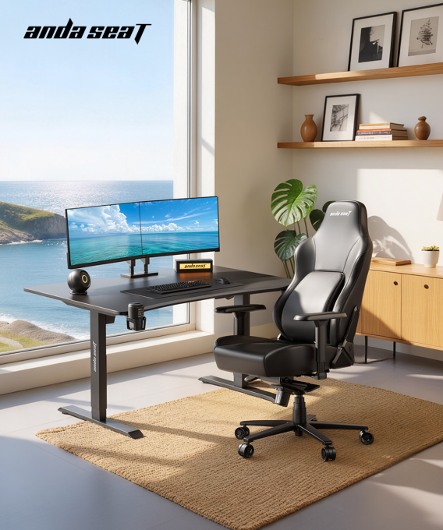
AndaSeat Phantom 4
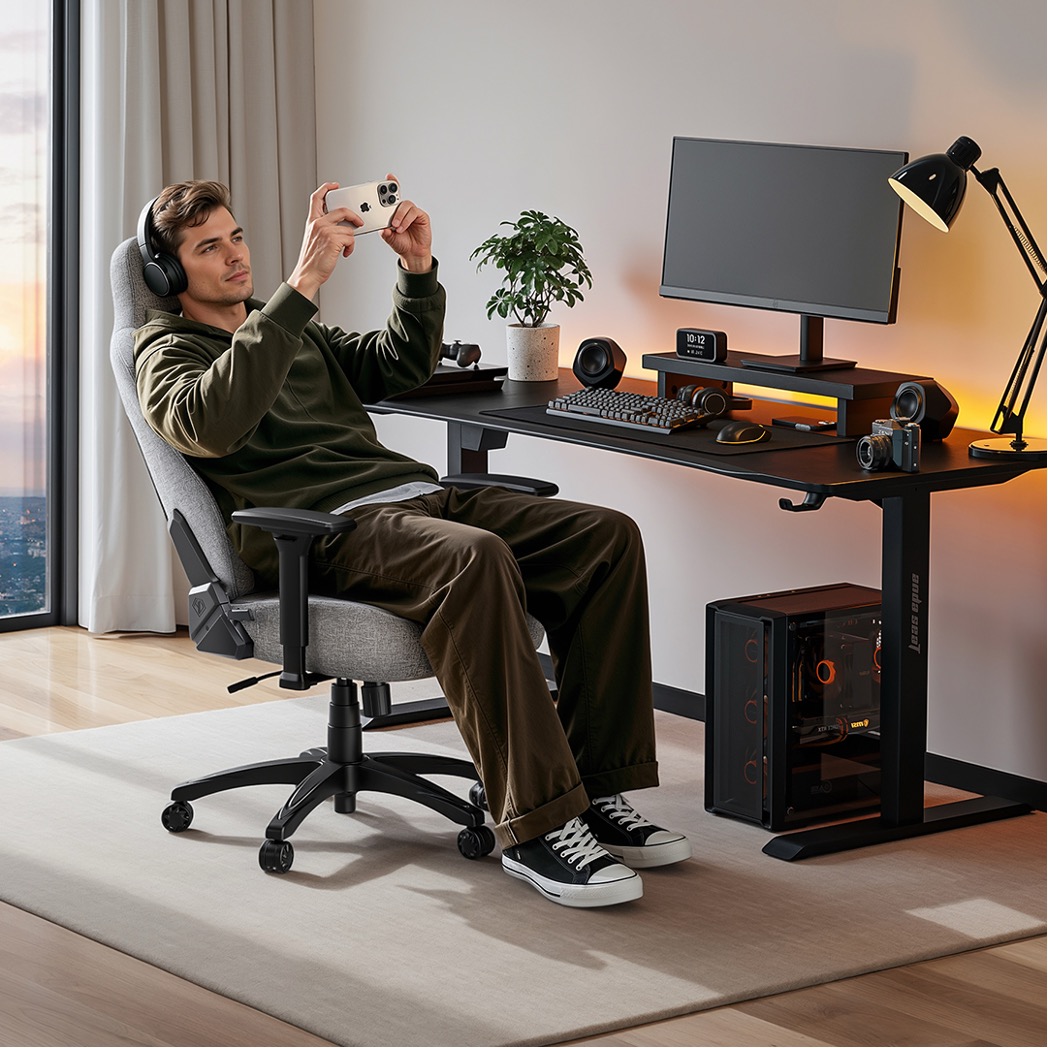
Phantom 4
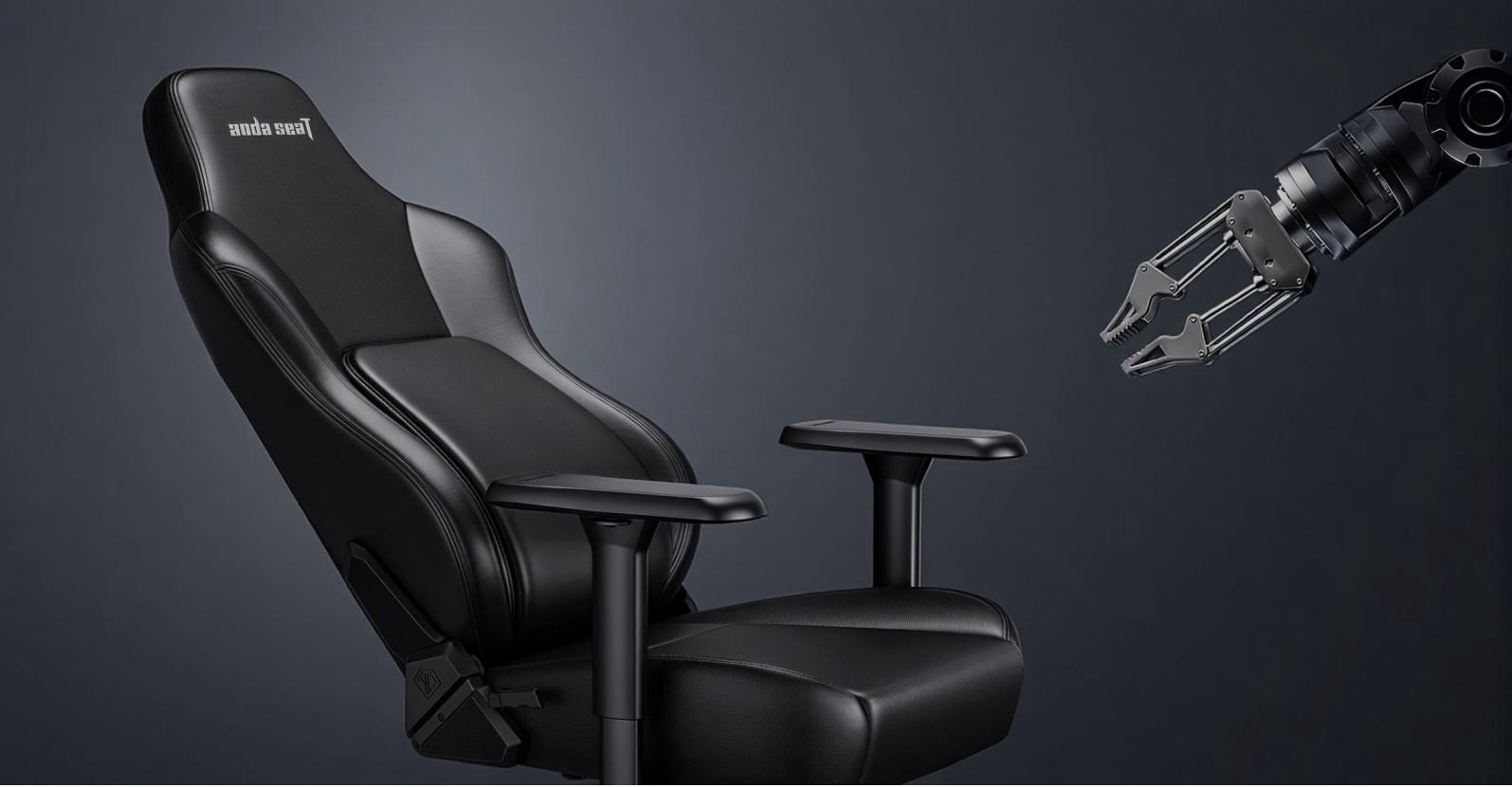
Phantom 4
AndaSeat Phantom 4 Brings Real-World Movement Into the Design of Responsive Seating
SPOKANE, WA, UNITED STATES, October 1, 2026 /EINPresswire.com/ -- AndaSeat is detailing the design thinking behind its Phantom 4 Series, an ergonomic seating platform developed around a simple observation: people rarely remain in exactly the same position while they sit. During work, gaming, reading or general computer use, the body shifts repeatedly through small changes in pelvic position, back contact, arm placement and torso angle, even when the user never formally leaves the chair.That everyday behavior is increasingly visible in ergonomics research. Recent field studies have moved beyond laboratory snapshots of sitting posture and toward longer observation of how people actually behave at their own workstations. The findings reinforce an important distinction for furniture design: a chair may be configured around a preferred starting position, but real sitting continues to evolve after that position has been established.
Phantom 4 was developed around that gap between initial setup and ongoing movement. Rather than asking the user to repeatedly rebuild the chair configuration each time the body shifts, AndaSeat designed the series around a combination of deliberate adjustment and limited mechanical response. The resulting philosophy is expressed in the product’s “Made To Move With You” positioning, but the engineering principle underneath it is more specific: support should establish a stable relationship with the user without assuming that the user will remain completely still.
Real Sitting Behavior Became the Starting Point
Traditional ergonomic diagrams often present sitting as a set of angles: the feet positioned on the floor, the knees at a defined relationship to the seat, the torso aligned with the backrest and the arms placed relative to the work surface. Those references remain useful for establishing a workstation, but they do not describe everything that happens after a person begins working.
People naturally move within the chair. They shift weight between sides, move forward during concentrated keyboard work, settle farther into the backrest while reading, turn toward another screen or object and make small adjustments that may occur without conscious thought. These movements are not necessarily full posture changes; many are subtle responses to the task, the environment and the length of time spent seated.
For AndaSeat, the design question behind Phantom 4 was therefore not how to eliminate these changes. It was how to distinguish between the adjustments that should remain intentional and the smaller movements that seating could accommodate mechanically. That became the conceptual foundation for the Series’ Dynamic Auto-Tracking Lumbar system.
Dynamic Lumbar Separates Preference From Movement
Phantom 4 begins by keeping one important decision with the user: the amount of lumbar projection. The mechanism provides 15 locking positions across a 0–95 mm adjustment range, allowing the lower-back contact point to be extended forward when more pronounced support is preferred or retracted for a flatter relationship with the backrest.
Once the user establishes that baseline, the mechanism introduces a second layer of movement. In its extended positions, the lumbar structure can swivel approximately 5 degrees to either side and tilt through a 25-degree forward-and-back range. These movements are intended to allow the support surface to retain contact as the torso shifts instead of requiring the lumbar mechanism to be manually reset after every smaller change.
This separation between preference and response defines the central Phantom 4 design logic. AndaSeat did not attempt to make the chair decide how much lumbar support a person should use. That remains a subjective configuration. The responsive mechanism begins only after the preference has been established, handling a narrower category of motion that can occur naturally within the selected setting.
Movement Needs a Stable Reference
Designing for natural movement does not mean maximizing the number of components that move. In fact, AndaSeat approached Phantom 4 around the opposite idea: responsive structures need stable reference points if their motion is going to feel controlled rather than unpredictable.
The Phantom 4 Series uses a 55 kg/m³ cold-cure foam seat as the comparatively stable platform beneath the moving back-support system. Its molded structure provides a consistent surface for the pelvis and thighs while the lumbar mechanism responds above it. The chair therefore divides movement by function instead of allowing all contact areas to change simultaneously.
Larger movements remain deliberately controlled by the user. Both Phantom 4 and Phantom 4 Pro provide up to 135 degrees of backrest recline and approximately 15 degrees of rocking, allowing users to move from more upright activities toward more relaxed seated states when they choose to do so. Responsive lumbar tracking operates within those broader states; it does not replace the user’s decision to recline, change seat height, reposition the arms or leave the chair entirely.
That balance between stability and motion is central to AndaSeat’s interpretation of responsive seating. A chair designed for movement still needs anchors. The design task is determining where movement adds useful adaptability and where predictability remains more important.
Two Models Explore Different Degrees of User Control
The relationship between Phantom 4 and Phantom 4 Pro extends the same principle beyond the lumbar system. Both models share the Dynamic Auto-Tracking Lumbar concept, but they differ in how much manual adjustment surrounds that common core.
Phantom 4 takes a more direct approach, with 2D armrests providing forward-back and vertical movement, an adjustable elastic-strap memory-foam head pillow and a butterfly tilt mechanism with a 10 cm seat-height range. The control structure is intended to cover the primary adjustments required for everyday work, gaming and home use without introducing additional layers of interaction around every contact point.
Phantom 4 Pro increases that control density. Its 3D 360-degree rotating armrests add approximately 6 cm of forward-back travel and 7 cm of vertical adjustment together with rotational positioning. The Pro model also uses a magnetic memory-foam head pillow with a cooling layer and approximately 20 cm of vertical placement range, while its multi-function tilt mechanism adds a tilt-lock function and a 6.5 cm seat-height range.
The distinction reflects a broader AndaSeat design view: responsiveness and adjustability are not the same thing. Responsive structures handle certain movements with less intervention, while adjustable structures give the user more deliberate control. Phantom 4 and Phantom 4 Pro combine those two ideas at different levels rather than assuming that every user wants the greatest possible number of manual controls.
Responsive Seating Is About Following Behavior, Not Correcting Every Motion
Current ergonomics research is increasingly able to observe sitting behavior in greater detail. Wearable accelerometers, pressure arrays, motion-capture systems and vision-based tools allow researchers to follow posture changes across longer periods and in more realistic environments. That richer picture is showing how difficult it is to reduce everyday sitting to a single static state.
For product design, the implication is not that every movement needs to be detected, scored or corrected. Phantom 4 deliberately takes a mechanical rather than diagnostic approach. It does not classify posture or tell users whether an individual movement is right or wrong. Instead, the chair provides a defined support range and allows selected components to maintain contact as movement occurs within that range.
This approach also keeps the limits of seating clear. A responsive chair is not a substitute for standing, walking or taking breaks. Movement within a chair remains seated movement. AndaSeat’s design objective is more focused: when a person is seated and naturally changes position, support should not depend on remaining frozen in precisely the same geometry established at the beginning of the session.
Designing Around Behavior Becomes the Broader Brand Principle
Phantom 4 reflects a broader direction in AndaSeat’s ergonomic development: moving from designing around isolated product features toward designing around the relationship between human behavior and mechanical response.
The Series combines a stable cold-cure foam seating platform, a user-selected lumbar baseline, controlled auto-tracking movement, adjustable recline and two levels of peripheral control. Even practical elements such as magnetic side covers follow the same usability thinking by simplifying access during assembly and later maintenance rather than treating those interactions as separate from the overall product experience.
For AndaSeat, “Made To Move With You” therefore describes more than a mobile lumbar mechanism. It reflects a design methodology in which the chair begins with real human behavior rather than an assumption of permanent stillness. The user remains responsible for the major choices — how much lumbar support is preferred, whether to recline and where to position the chair relative to the workstation — while the mechanical system handles smaller movement where continuous manual intervention would add little value.
That division of responsibilities defines AndaSeat’s approach to responsive seating: the goal is not to make every part of the chair move, but to design stability and movement around the way people actually sit.
About AndaSeat
Founded in 2007, AndaSeat develops ergonomic seating and workspace products for gaming, professional and home environments. Its portfolio includes ergonomic chairs, standing desks, monitor arms and related workspace accessories. AndaSeat’s product-development approach combines structural engineering, material design, adjustable ergonomics and human-centered interaction, with an emphasis on how furniture responds to changing bodies, tasks and environments.
AndaSeat Marketing
AndaSeat
+ + 86 139 2232 2347
email us here
Visit us on social media:
LinkedIn
Instagram
Facebook
YouTube
TikTok
X
Legal Disclaimer:
EIN Presswire provides this news content "as is" without warranty of any kind. We do not accept any responsibility or liability for the accuracy, content, images, videos, licenses, completeness, legality, or reliability of the information contained in this article. If you have any complaints or copyright issues related to this article, kindly contact the author above.
