

MLC Dharmendra Bhardwaj takes Sialkot Rivalry to Council in Sports Rescue Plan
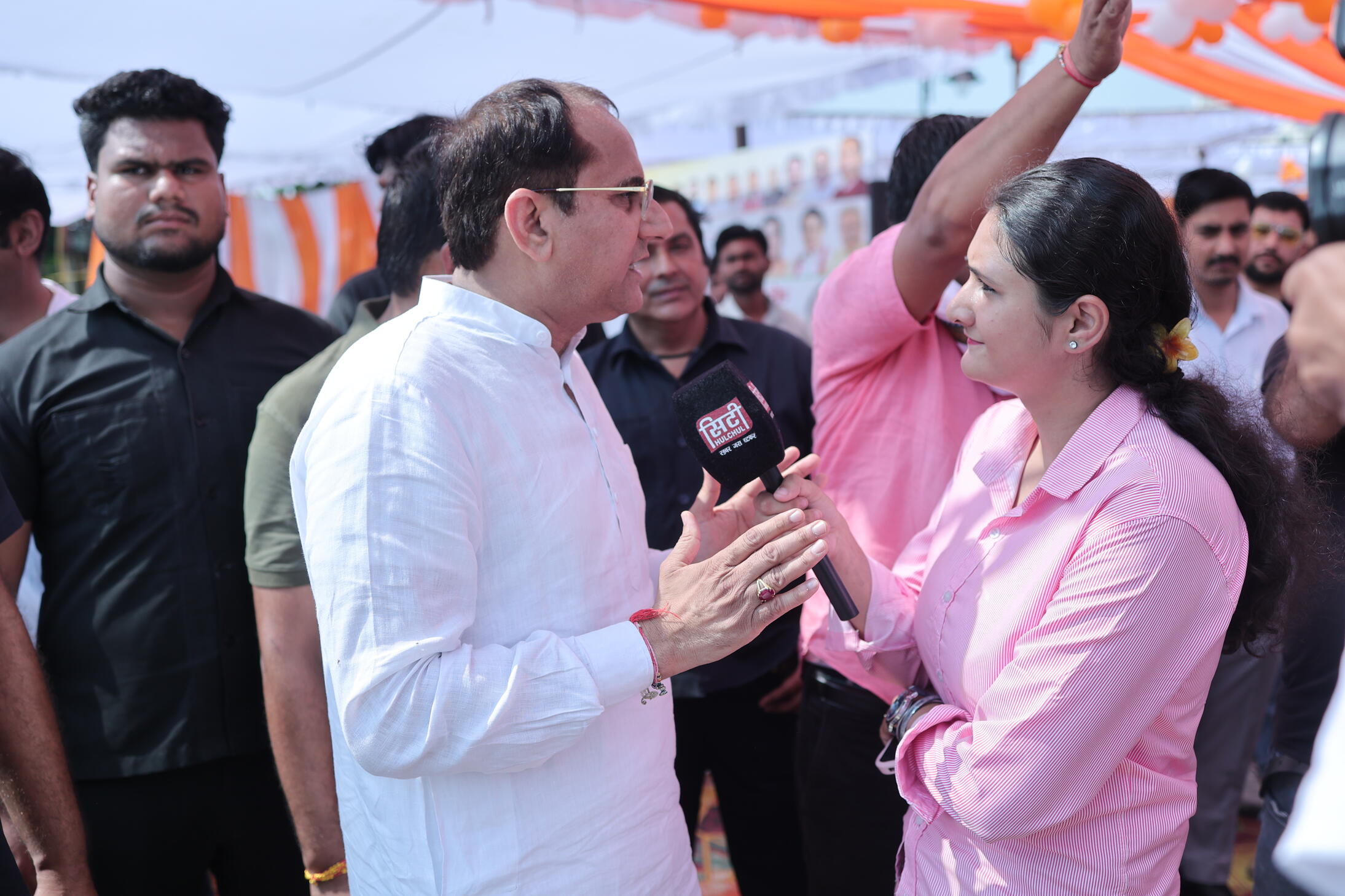
MLC Dharmendra Bhardwaj reads 8.1 Billion Dollar Window into Sports City Plan
MLC Dharmendra Bhardwaj puts 3.15 lakh sports jobs behind a five point rescue plan timed to the 8.1 billion dollar national export window.
MEERUT, UTTAR PRADESH, INDIA, October 3, 2026 /EINPresswire.com/ -- MLC Dharmendra Kumar Bhardwaj, Member of the Uttar Pradesh Legislative Council from the Meerut-Ghaziabad Local Authorities constituency, has placed on the public record a five-point rescue and growth plan for Meerut's sports-goods cluster, tabled today from his Meerut office. The cluster the plan addresses is the district's defining industry and one of the two poles of India's sports-manufacturing economy: it produces 40–45 per cent of India's sports-goods exports, an annual cluster turnover of ₹1,500–1,750 crore, through 9,878 registered manufacturing units — roughly 35,200 units across all scales — and carries the livelihoods of an estimated 3.15 lakh workers across the district's workshops, export houses and home-based stitching rooms.
Meerut is Uttar Pradesh's designated One District One Product hub for sports goods, shipping to more than 100 countries with the United States, the United Kingdom, Australia, Germany, France, South Africa and New Zealand among the principal markets, in a national industry whose exports reached US$523.24 million in FY 2023-24 and whose trajectory is now the subject of an explicit national target: the NITI Aayog report of March 2026 on India's sports-equipment manufacturing sector sets a goal of scaling the country's sports-goods exports to approximately USD 8.1 billion by 2036, on an 11 per cent share of the global export market.
The plan's premise is that this national window and this district's capacity should meet deliberately rather than accidentally — and that the cluster's documented pressures, left unattended through the window's opening years, would hand the 2036 opportunity to competing manufacturing geographies.
Sports City First — the five points. The plan, which the member has undertaken to pursue in the Legislative Council, before the State government in Lucknow and before the Union ministries in Delhi, comprises five commitments:
Point one — infrastructure. Fast-track notification of the sports-goods Special Economic Zone at Partapur, identified in the draft Meerut Master Plan 2041, moving the SEZ from the draft page to notified land with common facility centres, product-testing laboratories, a design studio and export-logistics linkage to the Delhi–Meerut Expressway — the 96-kilometre, 14-lane corridor whose opening in April 2021 cut the Delhi journey from more than two and a half hours to about 45 minutes — and to the Eastern Dedicated Freight Corridor, which passes through the district. The logistics argument is exact: a cluster that ships to more than a hundred countries sits within a commissioned expressway run and a dedicated freight alignment, and the SEZ would place its customs, testing and consolidation infrastructure inside that geometry rather than across it.
Point two — export survival. Enhanced and simplified export-credit access for sports MSMEs, pressed before the Union Commerce and Finance Ministries, and a review of the import-duty and logistics burden on English willow — the premium raw material for the cluster's top-end bats, which is imported and whose price and supply swings compress margins precisely where the cluster earns most. The plan's framing is that the willow question is not a protectionist ask but a raw-material-security one: the cluster's premium segment competes on English willow against established sourcing channels, and the duty structure is a policy variable directly under Indian control.
Point three — intellectual property. A "Brand Meerut" design-protection and geographical-indication push in partnership with the Sports Goods and Toys Export Promotion Council (SGEPC), so that a Meerut bat, a Meerut ball and a Meerut glove become legally defensible identities rather than designs any competing cluster can copy. The precedent is the city's own: the Kainchi market scissor craft — a hand-forged tradition of roughly 360 years — secured GI registration no. 389 in 2013, and the plan proposes the same collective-identity discipline for sports goods, with a design registry and "Brand Meerut" pavilions at international trade fairs sponsored through the export-promotion architecture.
Point four — artisan welfare. A formalisation study of the cluster's home-based, piece-rate workforce — the stitching, winding, polishing and finishing labour that runs through the district's homes and neighbourhood lanes — with saturation camps for PM Vishwakarma, MUDRA and CGTMSE across the manufacturing neighbourhoods. The national scheme context is now documented at scale: PM Vishwakarma has completed three years with roughly 30 lakh artisan registrations, about 24.5 lakh beneficiaries trained, and more than 18 lakh modern toolkits delivered, with loan sanctions crossing ₹5,300 crore on the scheme's official portal — and the plan's ask is that Meerut's sports-goods and scissor artisans, squarely within the scheme's notified trades, reach saturation rather than sample coverage.
Point five — skills and research. Modernisation of the MSME Technology Development Centre (PPDC), Meerut — the central government centre established in 1986 at the Sports Goods Complex on Delhi Road, serving the cluster with sports-goods training, CAD/CAM and management techniques and an accredited testing laboratory — into a modern export-chain school.
Industry linkage with the Major Dhyan Chand Sports University, whose foundation stone the Prime Minister laid at Salawa, Meerut on 2 January 2022 as a roughly ₹700-crore, 91-acre project and which has now crossed into operation, with construction works of roughly ₹230–250 crore in its first phase and new second-phase works of around ₹200 crore announced in early 2026 and admissions for its 2026-27 academic session opened in June; and pilot projects in computer-vision quality control — automated ball weight-and-balance inspection and bat-pressing analytics — reported at district manufacturers, so that the cluster's next skill premium is in measurement as much as in craft.
Why now — the pressures on the record. The plan responds to five pressures flagged through trade reporting and industry accounts across 2024–2026. Chinese low-end competition: machine-made footballs and entry-level equipment undercut Meerut's volume lines in price-sensitive export markets, exactly where margins are thinnest. English willow volatility: the premium input's price and supply swings land on the cluster's highest-value products. The GST compliance burden: documentation load falls disproportionately on small and home-based units, pushing artisans toward informal credit and off-book sales.
Design and IP theft: Meerut's designs are routinely copied in competing clusters, and the city has had no collective legal identity to answer with. Credit access: despite MUDRA, CGTMSE and PMEGP, a large share of the home-based workforce remains outside formal credit. The industry's own trajectory gives the warnings weight — district-sector documentation records the cluster growing at an average of roughly 8 per cent annually in recent years, a rate the same documentation notes is below the cluster's potential with technology and competitive stimulus.
The numbers that define the cluster. The verified profile: 40–45 per cent of India's sports-goods exports tracing to Meerut; ₹1,500–1,750 crore annual cluster turnover; 9,878 registered manufacturing units, including 3,781 MSME-registered units, of roughly 35,200 manufacturing units at all scales district-wide; an estimated 3.15 lakh workers dependent on the cluster (an industry estimate, not a census figure); exports to 100-plus countries; and the ODOP designation as the State's sports-goods hub. Product lines span the full export range — cricket bats in English and Kashmir willow, hockey sticks, footballs, boxing gloves, protective gear and gym equipment — from the batsmen's edge of the market to the entry-level volume lines.
The Sialkot question — a century-old rivalry. The plan frames Meerut's challenge in terms the global industry understands: the century-old relationship with Sialkot in Pakistan, the sister cluster from which Meerut's industry was, in significant part, born. The craft that built both cities traces to the migration of skilled artisans from Sialkot from 1925 onward — a movement that continued through Partition — and the two clusters' modern rivalry is a scholarly and trade-press staple, with comparative studies of Indian and Pakistani sports-equipment exports documenting the divergence.
Sialkot's sports-goods exports were reported at roughly USD 177 million in 2020 with the cluster employing over 3.5 lakh people directly and indirectly, while broader Sialkot exports across its sectors approach USD 900 million a year by earlier assessments; Meerut's cluster, by Invest UP and district documentation, holds the export-share edge in the Indian frame at 40–45 per cent of national exports. The plan's argument is not nostalgia but organisation: the sister cluster built buyer institutions, testing norms and a collective identity over decades, and Meerut's five points are the same institutions named for this district — a SEZ, testing at the TDC, an export council partnership and a legal brand.
The heritage houses — those who built the cluster. The cluster's institutional memory runs through houses whose dates are on the record. Sanspareils Greenlands (SG), since 1931 in Meerut, makes the iconic SG bat — the flagship brand of Sports City, whose bats have carried generations of international cricketers. B.D. Mahajan & Sons (BDM) dates to 1925 in Sialkot and moved to Meerut after Partition — the migration story in one company, and among India's first cricket-bat factories. Sareen Sports Industries, founded in 1969 by N.K. Sareen, carries more than five decades of bat-making.
Bhalla Sports, run by five brothers — Sanjay, Ashutosh, Shekhar, Ramesh Chand and Ashok Chand — manufactures and exports football, basketball and cricket equipment. Premier Legguard Works, the firm of Sumnesh Agarwal — chairperson of the SGEPC and a Meerut exporter — stands at the A-6 Sports Complex on Delhi Road, its protective equipment in export houses worldwide. Beyond the great houses, the cluster spans thousands of MSMEs and home workshops: willow clefts seasoning in yards, stitching and winding in homes, polishing and packing sheds — a complete craft chain inside the city's neighbourhoods.
The neighbourhood economy. The plan devotes its fourth point to the worker at the centre of the cluster, because the cluster's economics run through homes. In the lanes off the Delhi Road sports complex and across the manufacturing neighbourhoods of Abu Nagar and the old industrial pockets, a cleft of willow moves from a seasoning yard to a craftsman's courtyard, from a pressing shed to a finishing room where a family works together — piece-rate, home-based, largely invisible to the formal economy.
This is how Meerut has produced for the world for a hundred years. The plan's position, stated in the member's words, is that the artisan who stitches a football late at night in a Meerut lane is part of India's export story as much as any boardroom, and that the children's school fees of that household should not depend on whether a foreign buyer pays on time — hence the welfare and formalisation point carrying equal weight with the infrastructure asks.
The ask — to whom, what, by when. The plan places named demands before named authorities: the Government of Uttar Pradesh — notify the Partapur sports-goods SEZ, accelerate the ODOP sports-goods programme and sanction artisan-welfare camps in the manufacturing neighbourhoods within the current fiscal year; the Union Ministry of Commerce and Industry — enhanced export-credit support, the willow duty review and Brand Meerut pavilion sponsorship within the current fiscal year; the Meerut Development Authority — reserve and notify SEZ land at Partapur in the final Master Plan 2041 and integrate cluster logistics with the expressway and freight-corridor network; the SGEPC — the buyer-delegation calendar, the design-IP registry partnership and the GI push, first delegation within twelve months; and the UP MSME Department with the MSME-TDC — a funded modernisation plan for the Technology Development Centre within six months.
About Dharmendra Kumar Bhardwaj: Dharmendra Kumar Bhardwaj is a sitting Member of the Uttar Pradesh Legislative Council from the Meerut-Ghaziabad Local Authorities constituency (Const. 34) — elected on 12 April 2022 with 3,710 first-preference votes (89.61 per cent of those polled), the first victory for his party on the seat, in elections in which his party won 33 of 36 council seats. He began his career as a chemistry teacher in 1992 and holds an M.Sc.
from N.A.S. College, CCS University Meerut (1997) and a B.Ed. from Machra Degree College (1998). He is Chancellor of Motherhood University, Roorkee (since 2019); founder of the Mahaveer Educational Park, Meerut (2003); Chairperson of the Mahaveer Ayurvedic Medical College and Hospital, Meerut; Member of the Board of Management of Sardar Vallabh Bhai Patel University of Agriculture and Technology (SVPUAT), Meerut; and a working-council member of CCS University Meerut. His term runs to 11 April 2028.
Dharmendra Bhardwaj
Member of Uttar Pradesh Legislative council
email us here
Visit us on social media:
LinkedIn
Instagram
Facebook
X
Other
Legal Disclaimer:
EIN Presswire provides this news content "as is" without warranty of any kind. We do not accept any responsibility or liability for the accuracy, content, images, videos, licenses, completeness, legality, or reliability of the information contained in this article. If you have any complaints or copyright issues related to this article, kindly contact the author above.
