

Massachusetts Handicap Parking Placards: HandicapMD Introduces Medical Certification Preparation Guide

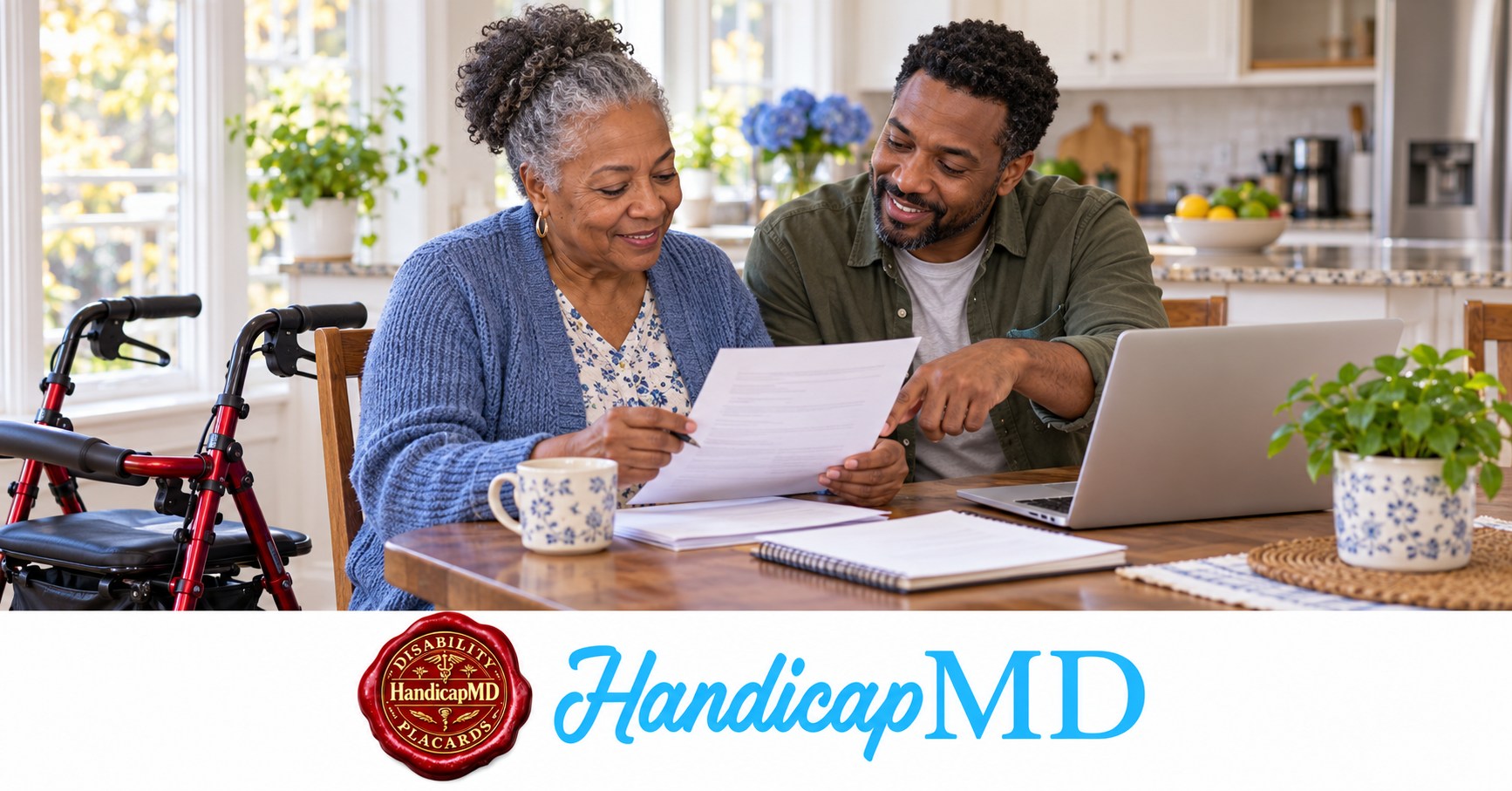
Massachusetts resource explains medical findings, applicant and provider sections, the 30-day filing window, and RMV Medical Affairs.
Massachusetts applicants can prepare by gathering relevant information and respecting form timing. The provider should document the findings the application asks for.”
BOSTON, MA, UNITED STATES, November 2, 2026 /EINPresswire.com/ -- BOSTON, MASSACHUSETTS — HandicapMD is introducing a Massachusetts medical certification preparation guide to help residents understand the Application for Disabled Parking Placard/Plate and its filing requirements. The resource explains the division between applicant and provider sections, the information needed for different medical categories, and why the certification deadline differs from RMV processing time.— Dr. Eric Jackson-Scott
The Massachusetts disability permit application form guide is intended for people preparing a new request, caregivers helping organize documents, and holders trying to distinguish permanent renewal from a further temporary application. It directs readers toward the current official form and the Medical Affairs process rather than treating every parking question as a routine registry counter transaction.
The announcement concerns an educational resource. An authorized professional completes the relevant medical assessment and certification; the Registry of Motor Vehicles reviews the request and issues the credential. A completed form or online medical appointment does not independently authorize parking or guarantee the government's decision.
Begin with the service being requested
The Massachusetts application offers several products, including a placard, passenger vehicle plate, motorcycle plate, and specified veteran or hospice-related requests. Applicants should identify the service that fits their circumstances before collecting vehicle records or arranging certification. Different choices have different supporting requirements.
A placard request does not require the eligible individual to own a vehicle. Plate options have separate primary ownership and registration requirements. Someone who relies on family transportation should not rewrite the vehicle owner's information to make a plate request appear simpler.
The guide encourages residents to use a current blank official application for a new request. A previously completed form can help locate an old record, but it should not be copied as a new certification or used to reproduce a provider's signature. The actual request needs its own accurate information.
Keep the two sides connected to the same person
The applicant portion identifies the person with the disability. It includes personal, residence, mailing, and contact information. A caregiver can assist with preparation, but the helper should not replace the patient's name or identifiers with their own merely because they provide transportation or manage the mail.
The provider side also identifies the patient. Reviewing both pages together can reveal a mismatch before the packet reaches Medical Affairs. Dates of birth, names, and requested identifiers should be copied from the appropriate record rather than guessed or supplied inconsistently.
Applicants should distinguish a residential address from a separate mailing address. A person receiving care away from home may need to ask how to describe the situation accurately. An address used for correspondence should not automatically be entered into every field without reading the label.
The applicant signature includes meaningful declarations
The application contains rules and authorization language in addition to a signature line. Applicants should review those statements after the form is prepared and understand what information is being supplied. A provider signature on the medical page does not replace the applicant's own required declaration.
Where a person cannot sign in the ordinary way, a helper should ask Medical Affairs about the accepted procedure and authority. Simply signing another person's name without explanation is not a sound way to resolve the problem. The guide encourages a clear record of who prepared and authorized each portion.
The signed authorization also concerns relevant medical information for RMV review. Patients can discuss any question about that language with the appropriate office before filing. Sensitive records should be supplied through suitable channels rather than posted publicly to ask for application advice.
Prepare for specific medical questions
The provider portion asks for more than a general statement that closer parking would be helpful. It includes clinical diagnosis, duration, qualifying findings, and professional identification. A symptom or billing code alone should not be treated as a substitute for the clinical diagnosis the application requests.
Patients can organize a concise history describing the condition, treatment, current limitations, and assistance used. The professional decides what findings apply and whether additional records or examination are needed. Applicants should not select a diagnosis from an online example or prefill a medical conclusion.
“Massachusetts applicants can prepare by gathering relevant information and respecting the form's timing,” said Dr. Eric Jackson-Scott. “The provider should document the findings the application actually asks for.”
The resource encourages patients to bring the complete current form to the evaluating office. That gives the professional the actual questions rather than an informal summary that may omit an important clinical or administrative detail.
Different medical categories ask for different evidence
The Massachusetts form addresses walking limitations, vision, respiratory conditions, cardiovascular disease, and limb loss or loss of use. The relevant category may require specific findings or attachments. A general diagnosis should not be assumed to answer every question associated with that category.
For example, the pulmonary portion requests clinical measurements and supporting information. Those results belong to the professional assessment. Patients can request existing records when the office needs them, but should not estimate a test result or perform an unsupervised exertion test to fill a missing number.
The provider should also identify the assessed duration and, for a temporary request, the supported period. A planned trip, work leave, or preferred credential length does not replace that judgment. The application should describe the person's actual condition and the evidence available to the certifier.
Driving questions remain part of the form
The provider page includes a question about medical qualification to operate a vehicle, with instructions addressing completion regardless of the patient's age or license status. A passenger should not tell the office to leave it blank simply because the person does not currently drive.
Parking eligibility and driving qualification are different questions within the application. Certain reported medical findings may have licensing implications under the form's instructions. Patients should discuss relevant questions with the professional and Medical Affairs rather than conceal information or assume a parking credential supplies driving clearance.
The guide does not predict an individual's licensing outcome. Its purpose is to help readers recognize that the medical page has several responsibilities. A complete assessment should answer the printed questions accurately and address the actual person, including any restrictions already established by the treating team.
Identify the individual certifying professional
The provider portion requests identifying and professional information, signature, and date. A clinic name by itself does not identify the practitioner taking responsibility for the certification. Missing professional details should be resolved with the office rather than invented by the applicant.
The form lists professional categories and includes scope-specific instructions. Patients should confirm that the office can complete the relevant Massachusetts certification and any required physician response. An authorization used for another state or medical purpose should not be assumed to answer this application's requirements.
If telehealth is considered, the professional must determine whether the case can appropriately be assessed remotely and whether sufficient information is available. Remote access does not remove the clinical questions or government document requirements. Patients can ask what supported documentation will be delivered and what steps remain afterward.
Distinguish the filing window from review time
The official application requires submission to Medical Affairs within thirty days of the provider's certification. The RMV's processing guidance separately asks applicants to allow at least thirty business days for review. Those two periods measure different things: when the certified packet must be submitted and how long agency processing may take.
Applicants can mark the actual provider signature date and organize the remaining documents promptly. A document download date or an appointment booking date is not a replacement for the certification date. The processing estimate should not be interpreted as permission to delay filing beyond the required window.
If a necessary attachment is missing and time is becoming short, the patient can contact the practice and Medical Affairs about the proper next step. Backdating a document or altering a professional signature date does not resolve the issue. The packet should remain an accurate record.
Use the designated Medical Affairs route
The current form directs the completed application to RMV Medical Affairs and explains that service centers do not process disability parking applications. A license or registration visit is a separate task. Residents should follow the designated submission instructions rather than assume that any RMV counter can complete the medical request.
Before mailing, applicants can review both sides, required signatures, relevant attachments, selected product, and consistent identity information. The review should catch omissions without rewriting medical findings. A patient who notices an unclear clinical entry can ask the professional to correct it through the proper process.
A secure copy and a record of submission can support later follow-up. If Medical Affairs requests information, the applicant can identify the particular issue and contact the responsible party. A status question and a medical clarification may require different contacts even though they concern the same application.
Permanent and temporary renewal are different
Massachusetts describes automatic mailing of a new permanent placard at the relevant renewal point. A permanent holder should check the recorded address and agency correspondence before assuming another complete medical application is required for ordinary renewal. A missing mailing may be an administrative issue to raise with RMV.
A temporary placard that needs further time or a change to permanent status requires a new application under current guidance. The RMV advises beginning that process before expiration. The new medical assessment should explain the present limitations rather than simply copy an old estimated recovery date.
The State's temporary program should not be described using a universal six-month rule taken from another jurisdiction. Applicants should check the current Massachusetts eligibility and temporary renewal instructions. The professional supplies an assessed duration, and RMV determines the credential issued under its requirements.
Replacement is its own transaction
Build the packet around the actual category
Consider a fictional applicant whose clinician needs a recent pulmonary result to answer the medical page. The useful preparation is to identify where that test was performed, request the relevant report, and ask the evaluating office how it should be supplied. An inhaler list or a general statement about shortness of breath should not be substituted for a measurement the form specifically requests.
Another applicant may be relying on the defined blindness documentation route. That person should review the instructions for the actual evidence rather than assume every disability benefit letter serves the same purpose. Both examples illustrate the value of reading the medical category before gathering records. The goal is a complete, relevant packet for the request, with the provider supplying clinical findings and the applicant organizing the supporting documents through the appropriate channels before the filing window closes.
A lost, stolen, or damaged placard should be handled through RMV's replacement process. It should not automatically become another original application or a request for a second credential for a different family vehicle. Applicants should explain the existing record and follow the current instructions.
Proper use remains personal to the eligible holder. A relative should not use the placard for an unrelated errand, and a photocopy is not a substitute for the issued item. Drivers need to preserve access aisles and observe parking restrictions even when the holder has a valid credential.
The Massachusetts handicap parking placard overview provides an overview of medical evaluation and application preparation. Readers can connect eligibility questions with the service request, understand supported certification, and identify the steps that remain. The form-specific resource complements that overview with applicant declarations, clinical documentation, and Medical Affairs submission requirements.
About HandicapMD
HandicapMD provides online medical evaluations related to disability parking certification. When supported by the clinical assessment and applicable requirements, a licensed clinician completes the medical portion of the relevant application. The company's educational resources explain state processes and help residents prepare questions. Government agencies retain responsibility for reviewing applications and issuing parking credentials.
https://www.handicapmd.com/
Crystal Dennon
HandicapMD
help@handicapmd.com
Visit us on social media:
Instagram
Facebook
YouTube
Skip the Doctor's Office Line with HandicapMD
Legal Disclaimer:
EIN Presswire provides this news content "as is" without warranty of any kind. We do not accept any responsibility or liability for the accuracy, content, images, videos, licenses, completeness, legality, or reliability of the information contained in this article. If you have any complaints or copyright issues related to this article, kindly contact the author above.
